🌸 Cicim (Jijim) The Art of Woven Embroidery
Cicim is one of the most decorative and labor-intensive flat-weave techniques in Anatolia. Often mistaken for embroidery, it is actually a specialized weaving method where extra colorful threads are added during the weaving process.
Anatolian artisan weaving a traditional Cicim rug
🎨 What Makes Cicim Special
Unlike a standard Kilim, where the surface is smooth, a Cicim rug has a raised pattern. The weaver creates the background first and then brocades the motifs on top using a needle-like technique on the loom.—
🎨 What Makes Cicim Special
Unlike a standard Kilim, where the surface is smooth, a Cicim rug has a raised pattern. The weaver creates the background first and then brocades the motifs on top using a needle-like technique on the loom.
Key Characteristics
3D Texture The patterns feel slightly elevated from the base. Intricate Details Allows for much finer and more delicate motifs than a regular Kilim. Versatility Traditionally used for bridal dowries (çeyiz), wall hangings, and decorative floor covers.
layout: default title: Cicim Weaving Technique —
🌸 The Art of Cicim (Jijim) Weaving
Cicim is a traditional flat-weave technique where additional decorative threads are wrapped around the warp, creating an embroidered or embossed look on the surface of the kilim.
1. The Classic Anatolian Cicim
Below is a magnificent full-view example of a traditional Cicim. Notice the repeating geometric diamond-like motifs and the bold use of natural dyes.
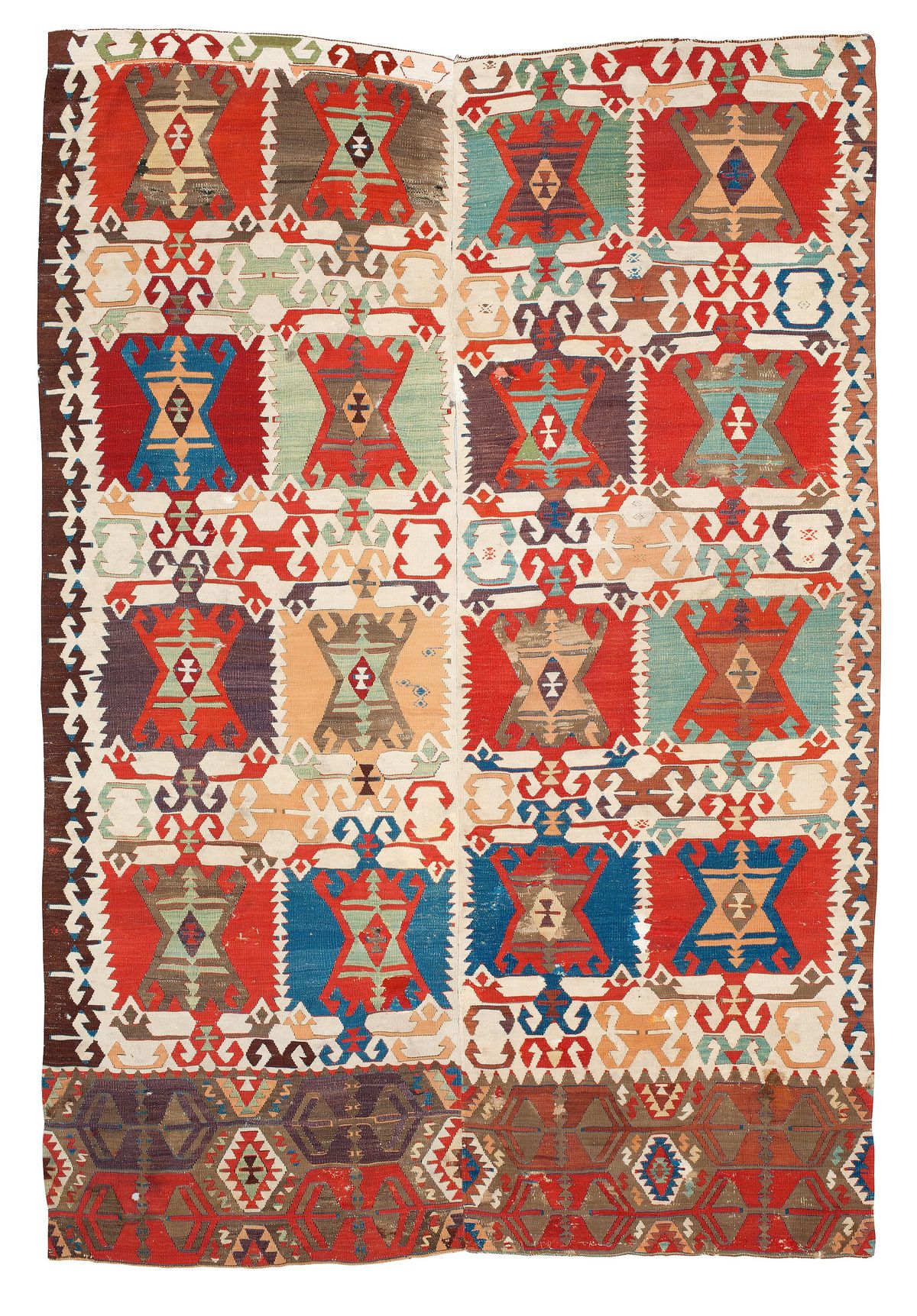
(Click image to enlarge details)
2. Geometric Precision (Texture Detail)
To truly understand the Cicim technique, one must look at the texture. This close-up reveals the extra weft wrapping that creates the distinct raised patterns on the foundation.
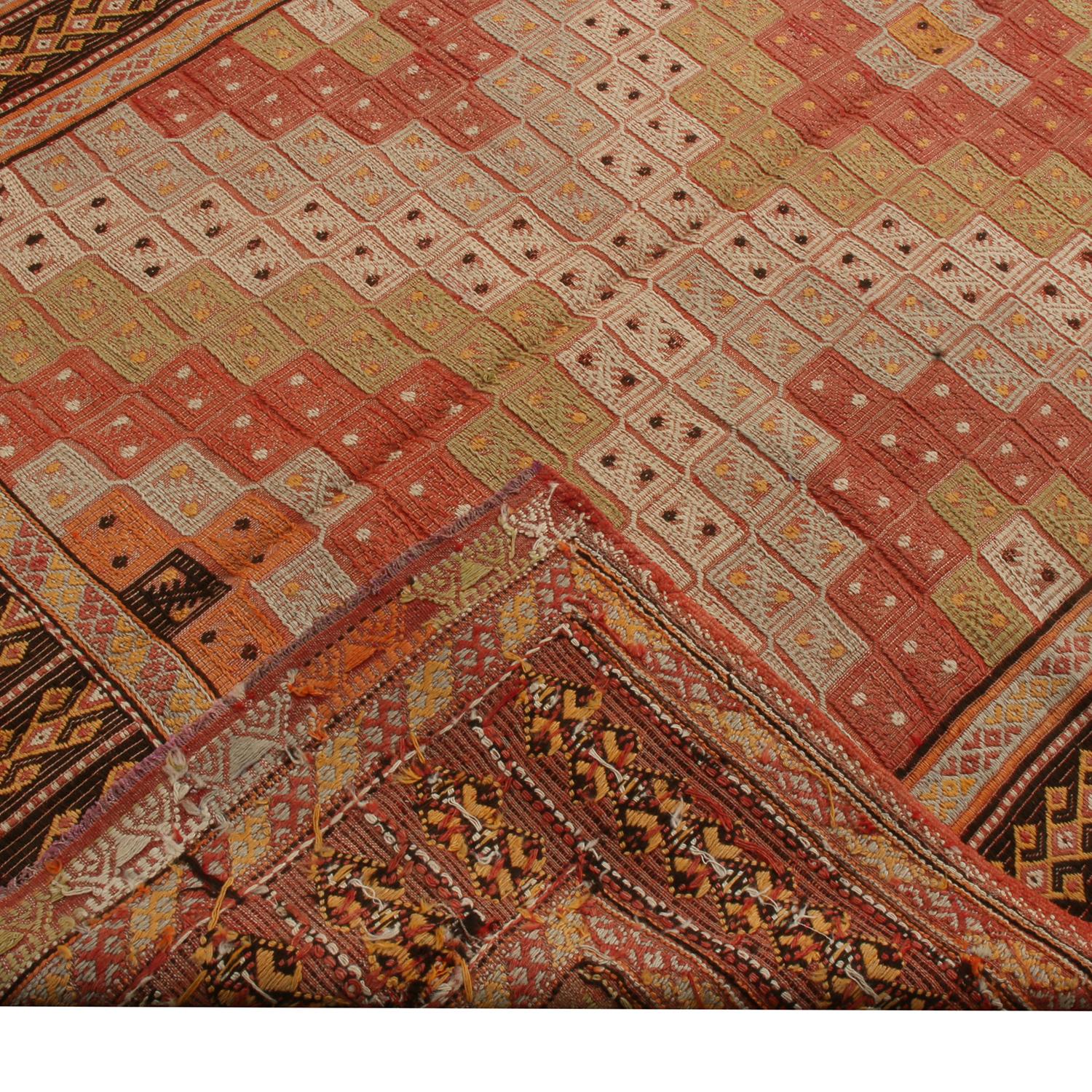
(Click image to enlarge details)
⬅️ Back to Main Guide | 📐 View Kilim Collection
🌸 Cicim (Jijim) Gallery: The Language of Geometry
Cicim weaving is like painting with a needle on a loom. Every line and shape is a “coded message” from the weaver. Let’s analyze these two masterpieces from our collection.
🍷 Example 1: The Nomadic Mystery (Deep Burgundy)
This piece represents the classic tribal Anatolian style. Its dark, rich tones and structured layout speak of tradition and protection.
🔍 Deep Dive: Analyzing the Nomadic Cicim (Point-by-Point)
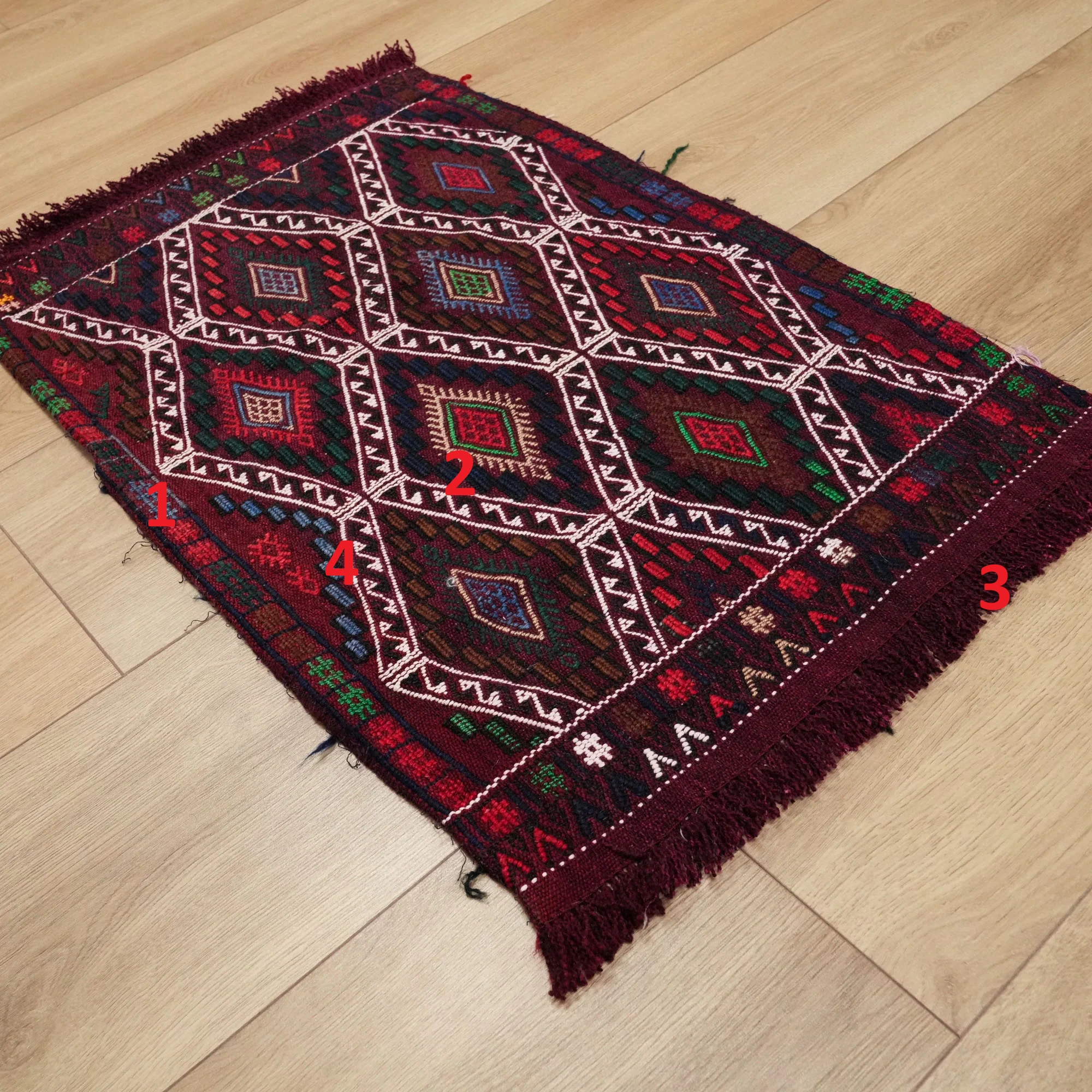
| 1 | The Outer Border (Kenar) | The Protective Shield: The border represents the boundary of the home. These repeating geometric patterns are designed to keep bad luck outside. |
| 2 | Central Burdock (Pıtrak) | Warding off the Evil Eye: These “star-like” motifs are called Pıtrak. It is believed to “catch” and neutralize envious glares. |
| 3 | The Fringes (Saçaklar) | The Foundation: Unlike machine rugs, these are the actual warp threads. They prove the rug was woven on a traditional loom. |
| 4 | Diamond Lattice (Baklava) | Unity & Connection: The white grid lines connect the motifs. This represents the strength of family and tribal bonds. |
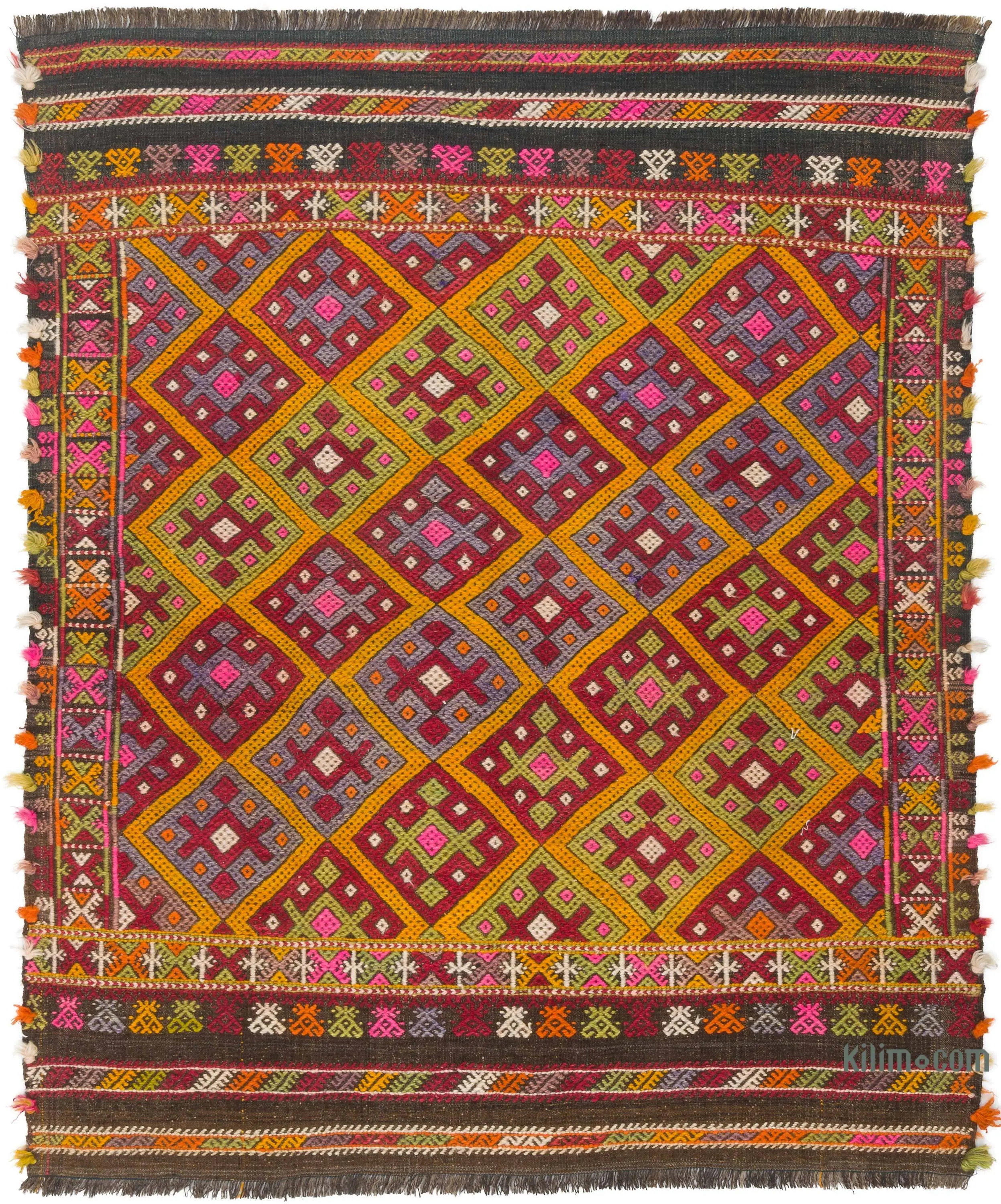
This Cicim is a celebration of life and joy. Its bright yellow foundation and repeating geometric blocks make it a perfect example of high-detail brocading.
🔍 Key Motifs & Symbols:
- The Hooked Diamond (Kancalı): The large central motifs are “hooked.” Hooks are used in weaving to “catch” good luck and abundance.
- Wolf Tracks (Kurt İzi): Look at the jagged, repeating shapes on the borders. Nomadic tribes used this to represent bravery and protection for their flocks.
- The Running Water (Akarsu): The thin wavy lines represent the flow of life and purity.
📊 Quick Comparison for Collectors
| Feature | The Nomadic Mystery | The Anatolian Sun |
|---|---|---|
| Aura | Formal, traditional, protective | Modern, energetic, cheerful |
| Material | 100% Hand-spun Wool | 100% Hand-spun Wool |
| Dyes | Natural Indigo & Madder | Natural Saffron & Root Dyes |
| Best For | Classic interiors, study rooms | Modern sunlit apartments |
🛡️ Why it is a Masterpiece?
You can feel the texture of the motifs sitting “on top” of the flat-weave base—this 3D effect is the soul of an authentic, hand-woven Cicim. Unlike machine copies, these pieces have a “heartbeat.”
⬅️ Back to English Guide | 🏠 Global Home Page
🔍 How to Identify a Real Cicim
- Look at the Back If you see loose threads or a messier version of the pattern on the back, it is a sign of authentic hand-brocading.
- Feel the Pattern Run your hand over the motif. You should feel it sitting on top of the flat base.
- Color Depth Genuine Cicims use many different colors in a small area, which is very difficult to do in machine weaving.