🎨 The Renaissance Masterpieces
When Anatolian Art Inspired European Masters
The "Golden Age" of Anatolian Influence
During the 15th and 16th centuries, Anatolian carpets were the most prestigious luxury items in the Western world. They were far more than floor coverings; they were diplomatic gifts exchanged between Sultans and Kings, and holy objects draped over cathedral altars.
Because the names of the Anatolian weaving villages were unknown to European scholars at the time, these carpets were named after the great painters who depicted them. These "Painter Carpets" prove that Turkish weaving was the aesthetic backbone of Renaissance interior art, symbolizing wealth, piety, and global reach.
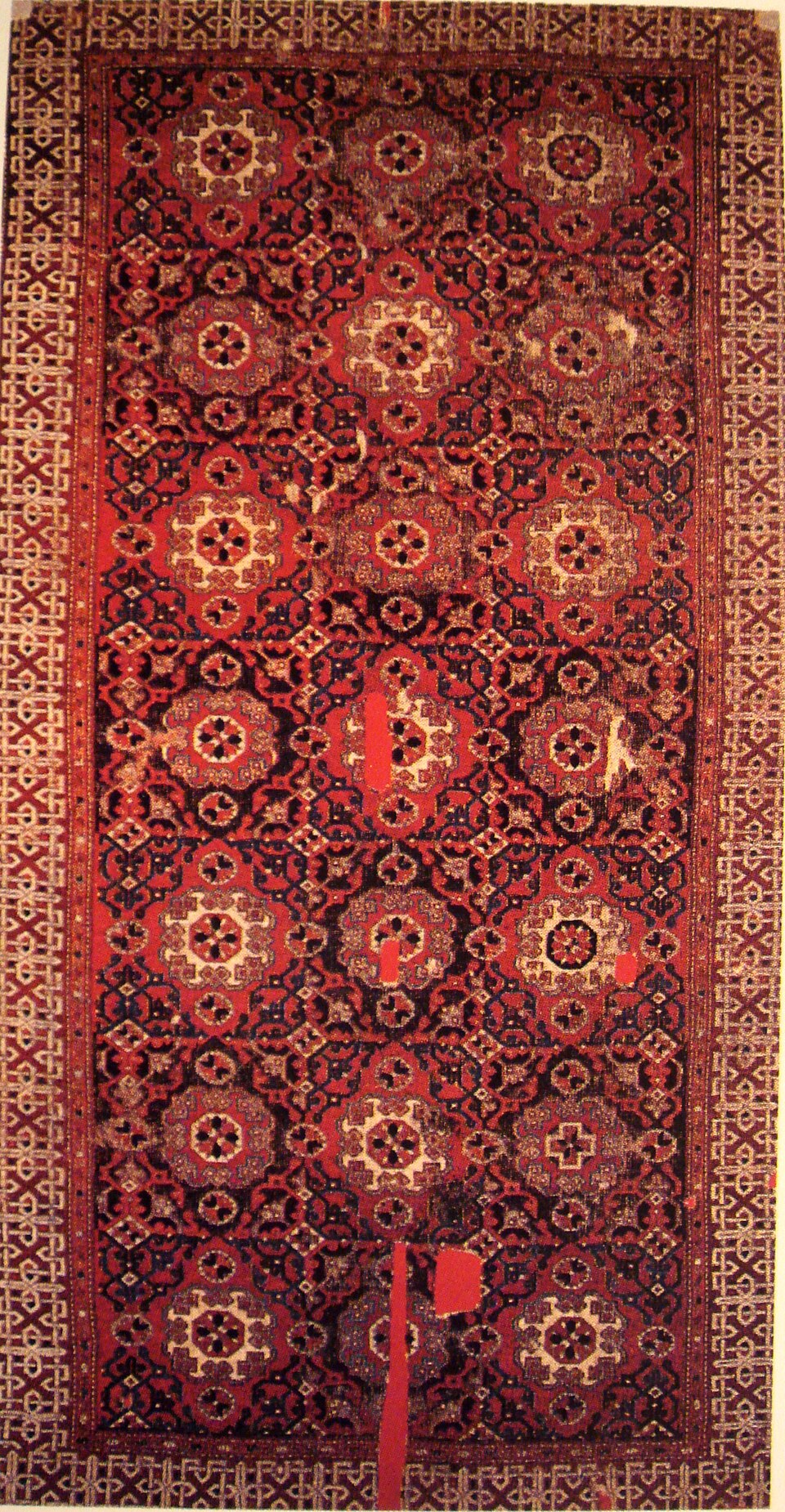
1. The Holbein Carpet
Featured in works like "The Ambassadors" by Hans Holbein the Younger. These carpets represent the mathematical precision of the East.
- Small-Pattern: Infinite rows of geometric octagons and diamonds.
- Large-Pattern: Large central octagons within squares (Wheel of Fortune).
- Heritage: Traditionally woven in the Bergama and Uşak regions.
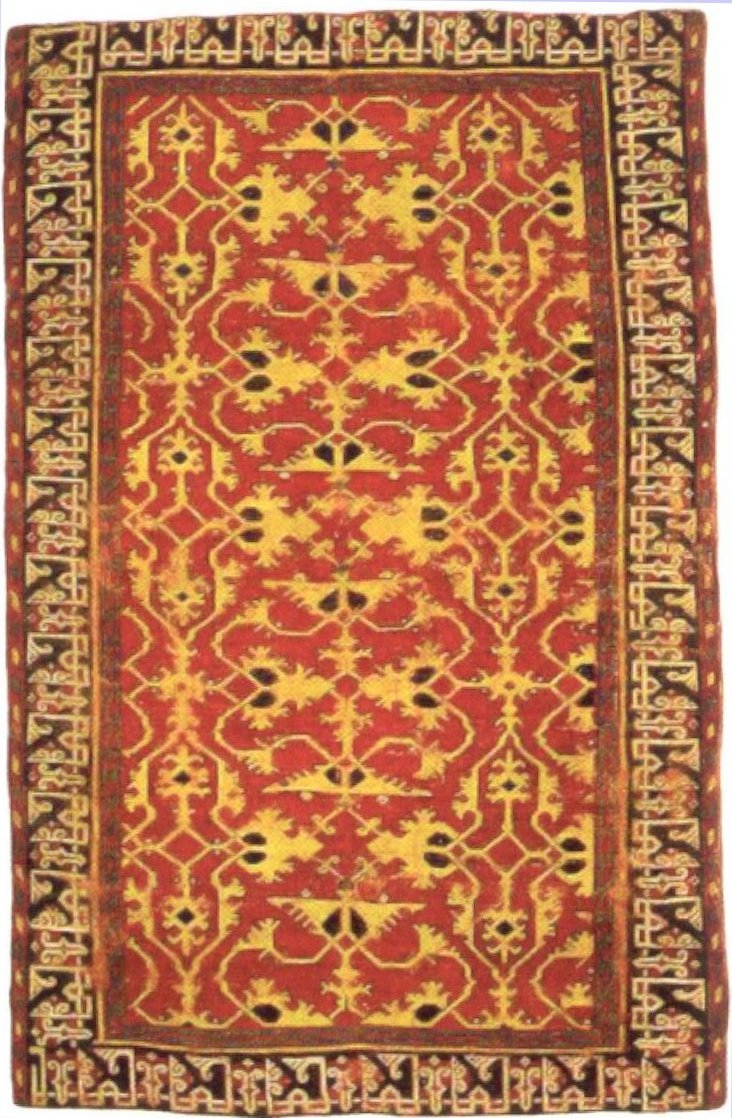
2. The Lotto Carpet
Characterized by "yellow lace on a red sea" as seen in Lorenzo Lotto’s paintings. This design is purely Anatolian "Arabesque".
- Style: Stylized floral branches (islimi) from the Uşak tradition.
- Prestige: These were the most exported carpets to Venice during the 16th century.
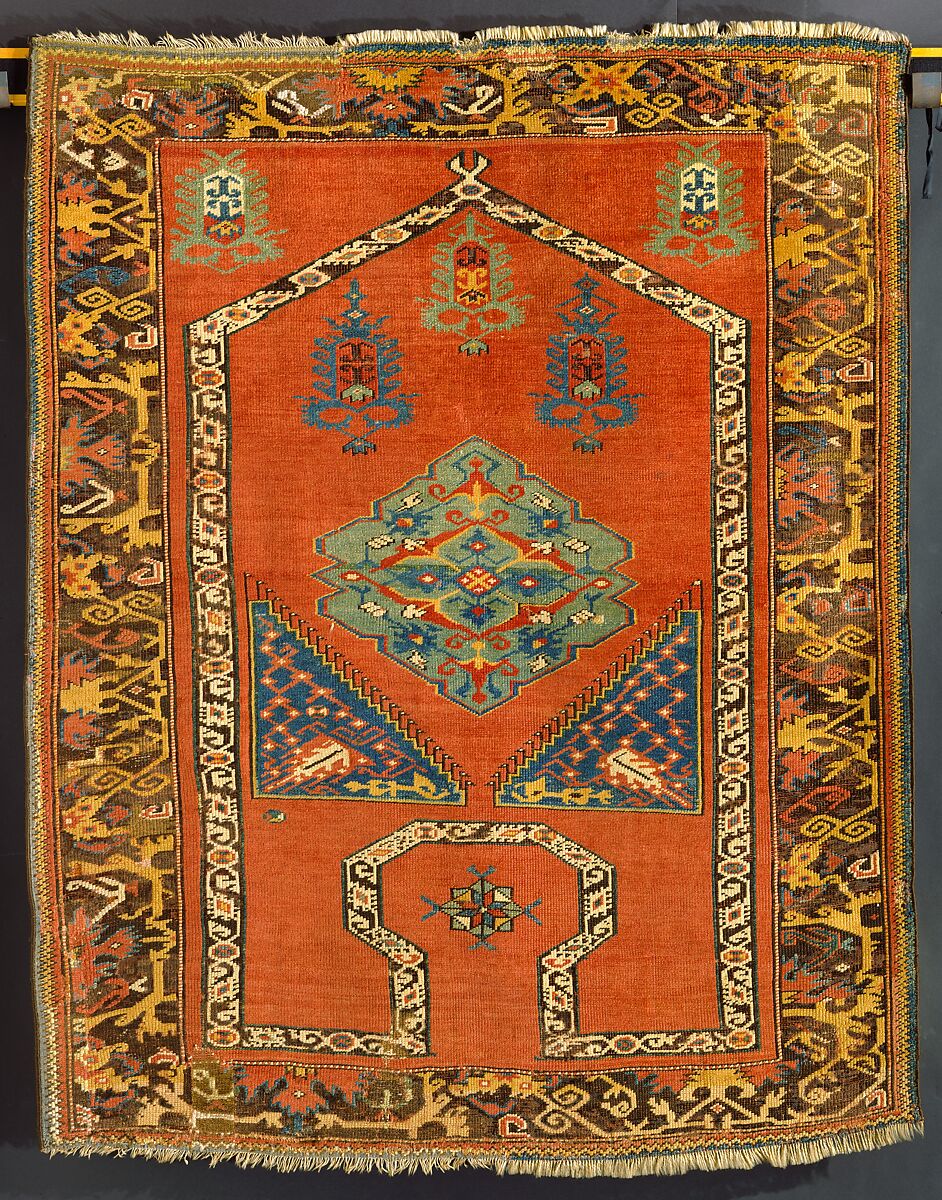
3. The Bellini Carpet
Known for the unique "Keyhole" or "Re-entrant" motif at the bottom of a prayer niche.
- Famous Example: Often found in 15th-century religious altarpieces as a symbol of sacred space.
- Technical: High-quality wool using the Ghiordes Double Knot.
Museum Exhibit:
🏛️ View in The MET Collection →